:PART
Six weeks at Berghs with 120 high schoolers, 20 teams and one brief from Stockholm Stad. Why are young people losing trust in democracy, and what would win it back?

The brief
Stockholm Stad sees young people losing faith in politics. Fewer vote, fewer get involved, fewer think it matters. :PART puts teenagers on briefs like this as youth consultants. Over two batches at Berghs I designed how they would learn, brought AI into the process, and mentored teams all the way to the stage.
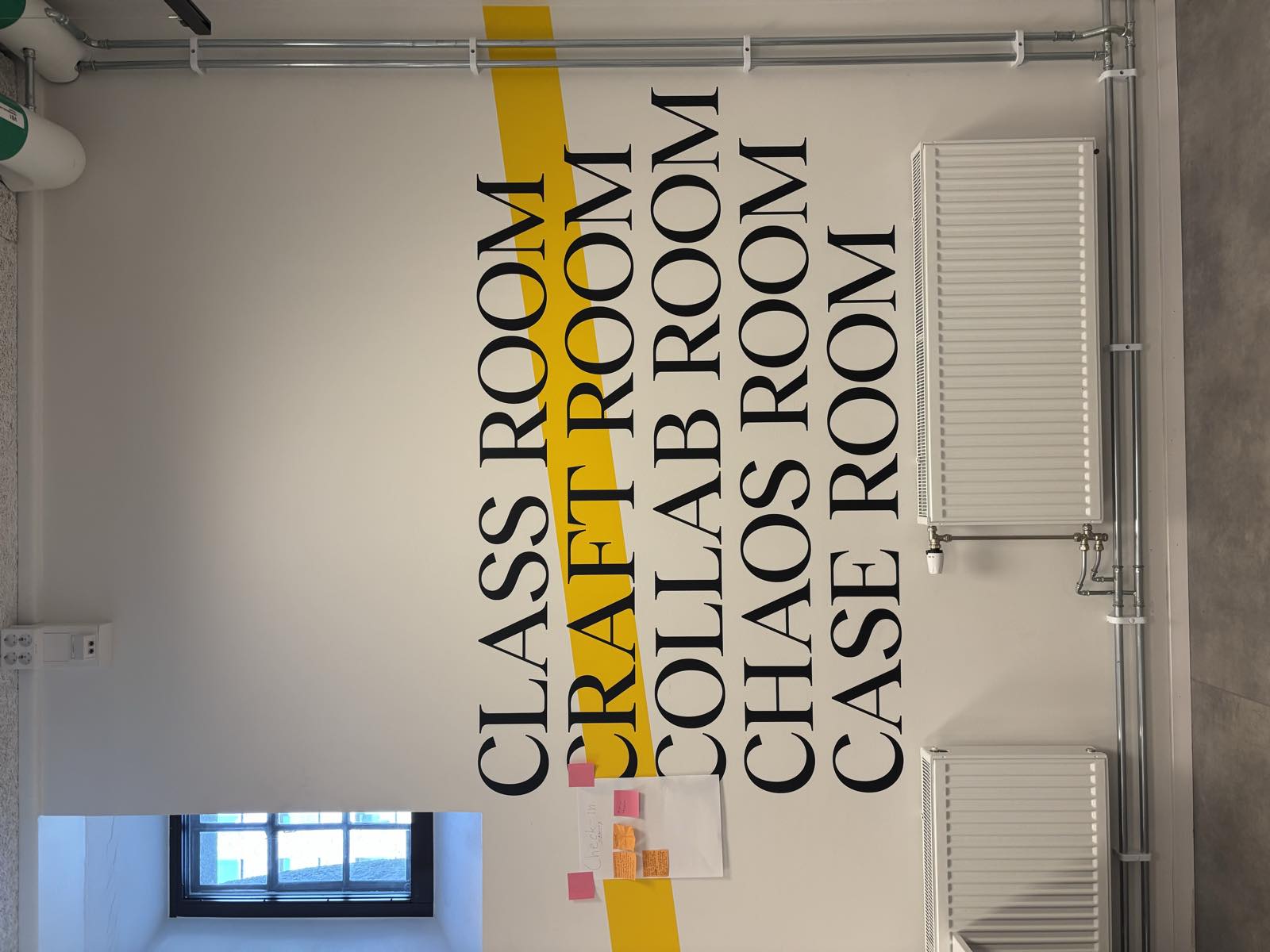
The challenge
Fewer young people vote. Fewer believe their voice counts.
- 01
A brief too big to hold.
Democracy doesn't fit on a post it. Each team had to dig until they found a piece they could actually move.
- 02
Sixteen, in a room of strangers.
Most had never worked in a team they didn't pick. Before any idea, they had to trust each other.
- 03
A tool nobody had taught them.
Every one of them had used AI. Nobody had shown them how to think with it.
Two diamonds. Three weeks. Twice.
The question we kept asking
Is this the root, or just the symptom?
Sprint 1. Team building & research
Discover · Sprint 1. Team building & research
No solutions yet.
The first sprint was the longest. It opened with team building, so strangers became a team before anyone touched the brief. Then it was only about the problem. Teams went out and asked people aged 15 to 24, and everything they heard went on a note. Catch yourself pitching an idea, and it goes in the parking lot.
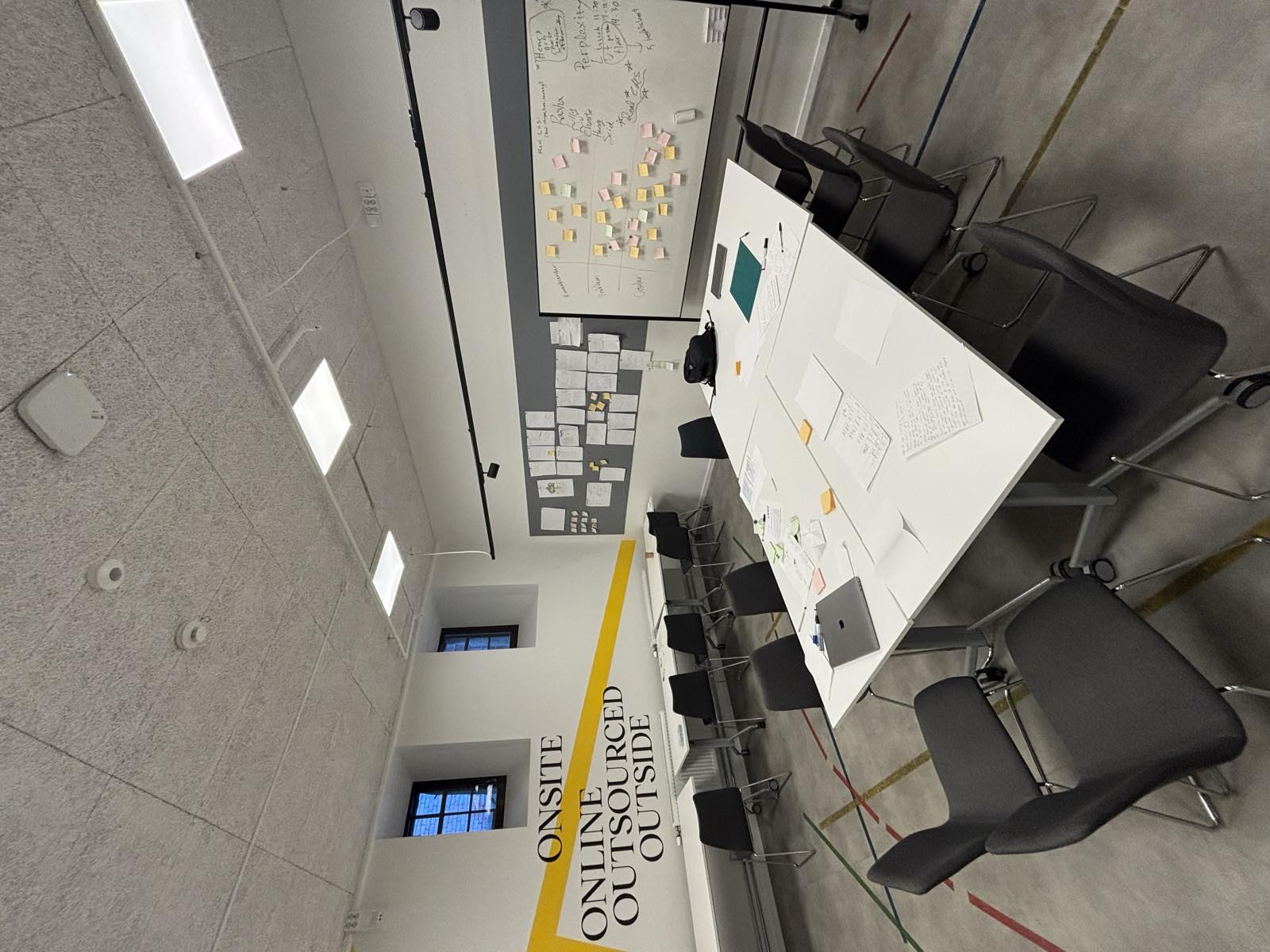

Point at a note
Define · Sprint 1. Team building & research
Roots, not symptoms.
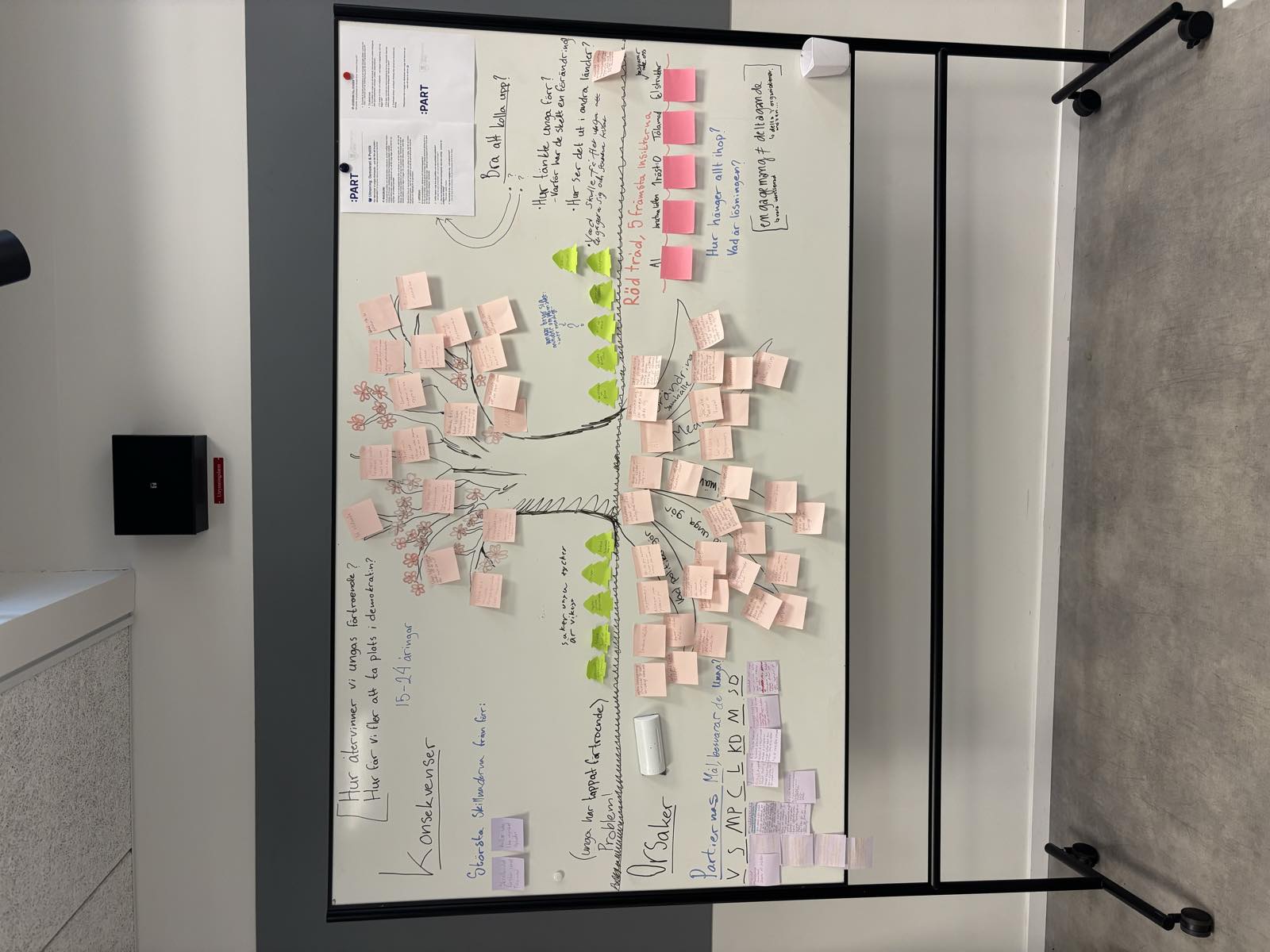
One team wrote their question across the top of the board: how do we win back young people's trust, and get more of them to take their place in democracy? Then they drew a tree. Consequences in the crown, causes in the roots: what politicians do, what young people do, the media, a society on the move. Last came a red thread, the five insights everything else hung on.

Point under the turf
Develop · Sprint 2. Ideas and concept
Seventy six ideas, then one.
Quantity first, judgment later. One board ran to idea 76 before anyone was allowed to pick. Then the Lotus blossom to go deep on the few that held, and AI as a sparring partner to find their weak spots before the teams fell in love with them.
- 60TikTok debates in sixty seconds
- 67An open budget young people get to spend
- 71An app where young people vote on local questions
- 74Politics in Roblox
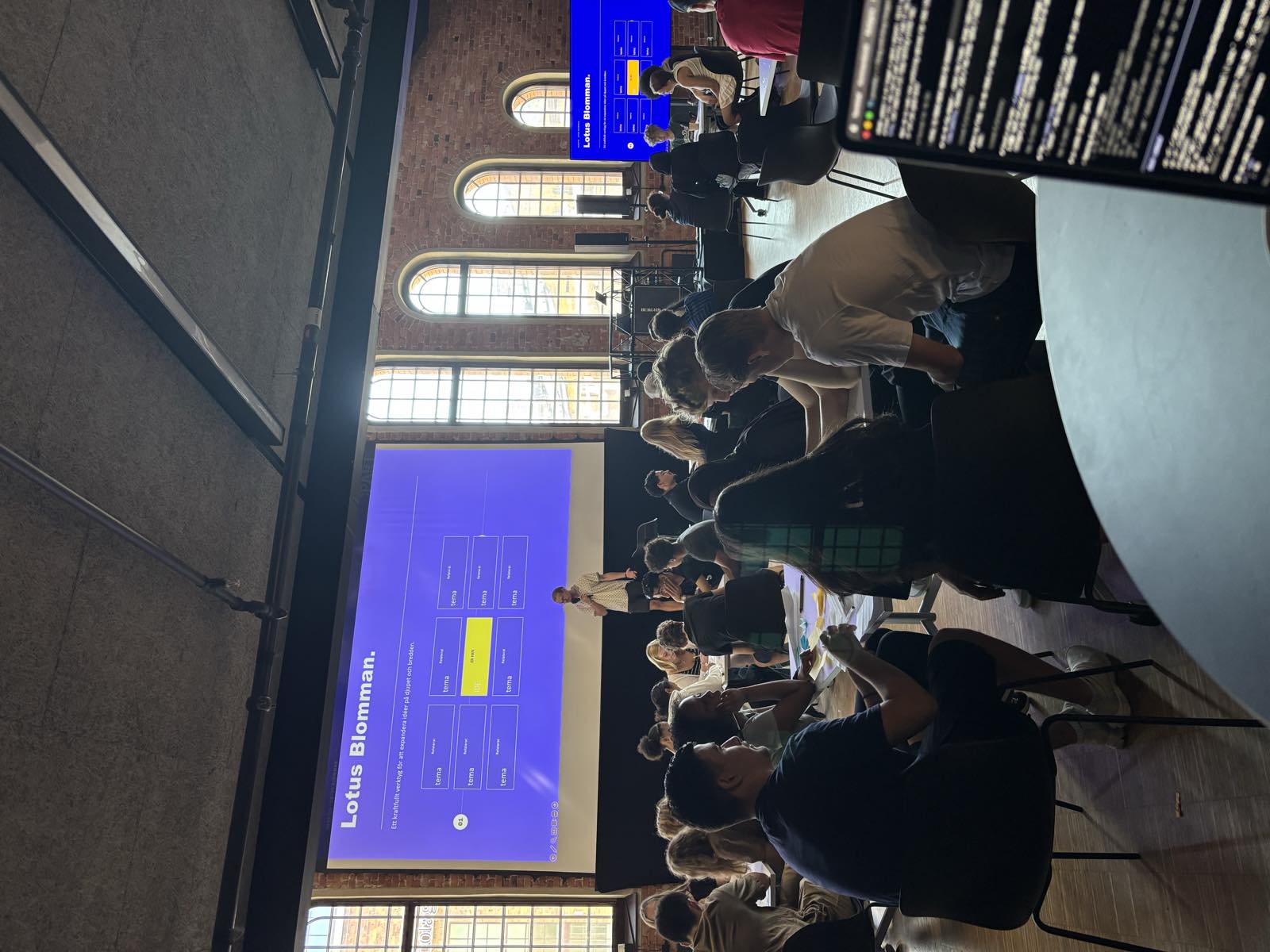

Point at a petal
Deliver · Sprint 3. Build and pitch
Something you can click, in front of a jury.
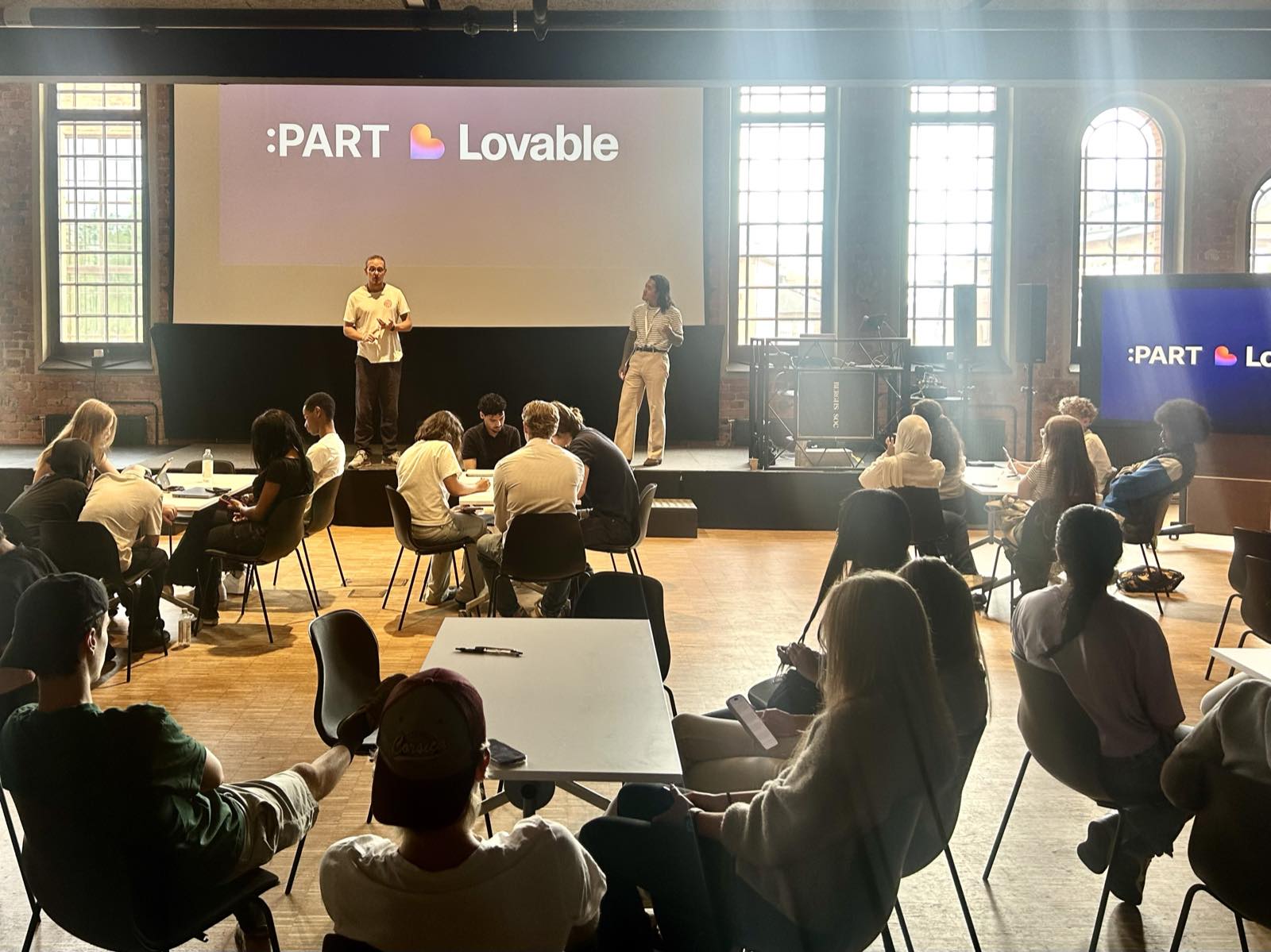
Concepts became working prototypes in Lovable, got tested on other teams, and changed. Then we coached them for the stage: the story, the timing, where to look. On the last day every team stood up in the auditorium at Berghs in front of a full house. Other students, people from Stockholm Stad, and a jury of entrepreneurs. The winners built Goose, a calm learning journey through democracy, the media and how Stockholm actually works.
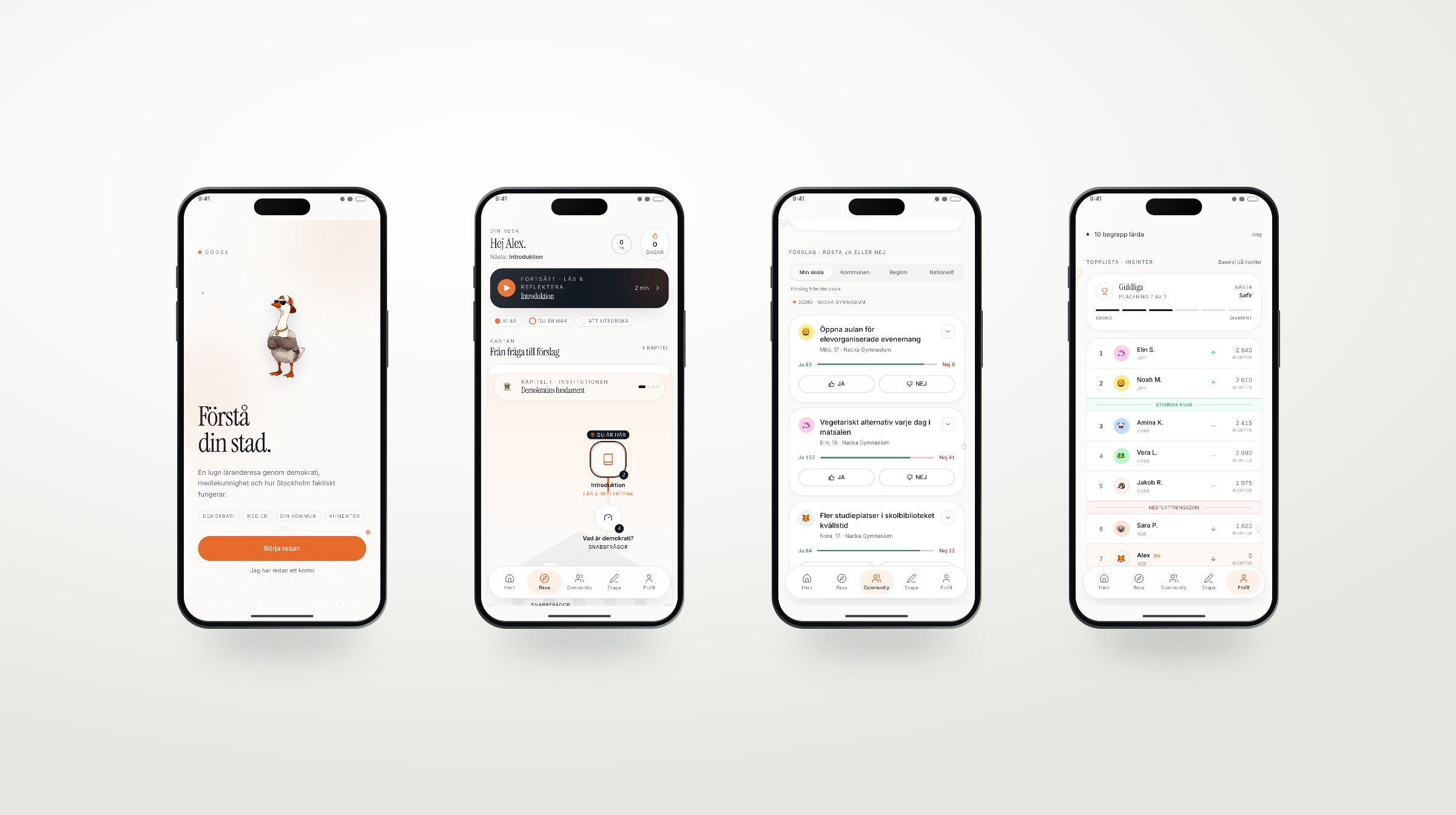
The result
Three weeks from strangers to a full auditorium.
Most of them had never worked in a team they didn't pick. On pitch day they held the stage in front of Stockholm Stad and a jury of entrepreneurs, each one standing on a cause they had dug up themselves, not on a guess.
- 120+
- high schoolers, in two batches
- 20
- teams, each run like a small agency
- 3
- sprints in three weeks, research the longest
- 1st, 3rd
- places for two of the teams I mentored
Think first. Build second.
My part was AI, from the first workshop to pitch day, with Lovable as sponsor. I taught it for sixteen year olds, not developers. No jargon, everything tied to apps they already use, and a question to the room before every answer.
They all used AI already. What they lacked was a method. Think it through with a chatbot first and let it poke holes in the idea. Check every fact it gives you. Then take it to Lovable and build.

With
- Robin KettulaHead of :PART
- Stockholm StadThe brief and the jury
- Berghs School of CommunicationThe room and the stage
- LovableSponsor, AI tools
- PARS SolutionsTeam platform
When you shape the future, make sure the future is in the room.